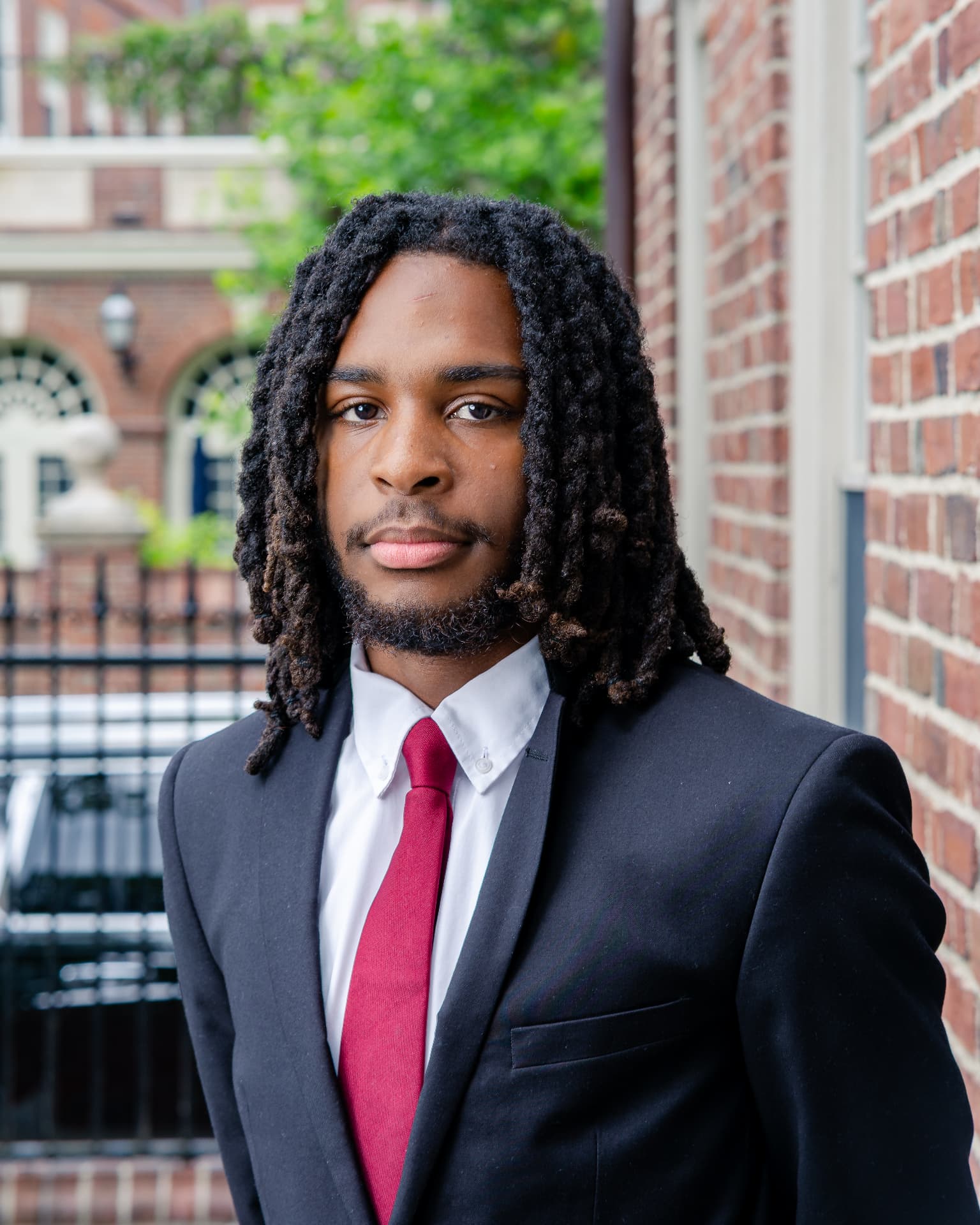
Ashton Brandon
Psychology Researcher | Behavioral Data & Applied Behavior Analysis
Morehouse College psychology graduate studying how environment and culture shape stress, attention, and behavior.
- B.A. Psychology, Morehouse College
- RBT 40-Hour Training Completed
- W.E.B. Du Bois Fellow, Harvard University
- Ronald E. McNair Scholar
About
A researcher grounded in community
Ashton is from Flint, Michigan, and is now based in Atlanta, Georgia, where he earned his B.A. in Psychology at Morehouse College (Aug 2022 – May 2026). His research asks how sound environments, cultural relevance, and familiarity affect stress and cognitive performance — and how that knowledge can shape culturally responsive interventions and careful behavioral data collection.
As a Ronald E. McNair Scholar and a W.E.B. Du Bois Fellow at Harvard University, he has coordinated participant sessions, administered surveys, and analyzed data, presenting his thesis research at ABRCMS in November 2025. He completed 40-hour RBT training through the Autism Partnership Foundation in 2026 and is pursuing applied behavior analysis work supporting children and families under BCBA supervision. He also studied abroad at the University of Science and Technology Beijing, and he speaks English fluently and Mandarin at an intermediate level.
Outside of research, Ashton loves poetry — a passion that shapes how he thinks about language, identity, and expression.
His goal is to connect rigorous behavioral research to real-world care.
Featured Research
Why the Caged Bird Sings: Auditory Interventions for Stress and Cognitive Performance
Senior Thesis · Morehouse College · Nov 2024 – May 2025 · Presented at ABRCMS, November 2025
The Question
Do culturally relevant sounds help Black college students focus and manage stress better than nature sounds, city noise, or white noise?
Why It Matters
Most research on sound and focus has studied predominantly White samples. This study tested whether common assumptions, like "nature sounds help everyone focus," hold for HBCU students.
Method
Participants
15 Morehouse College students, randomly assigned to 1 of 4 sound conditions.
Conditions
Gospel/jazz instrumental music, birdsong, urban sounds (traffic, construction, conversation), and white noise (control) — all calibrated to 50–60 dB.
Measures
Stroop test (reaction time and accuracy, 50 trials via PsyToolkit) and the Perceived Stress Scale (PSS-10).
Analysis
R, one-way ANOVA with Tukey HSD post-hoc tests; 579 trial-level data points analyzed; qualitative feedback analyzed thematically.
Key Findings
370 ms faster
Urban sounds produced the fastest reaction times, significantly faster than birdsong (p < .001).
51.2% accuracy
Birdsong produced the slowest reactions and lowest accuracy, challenging the idea that nature sounds benefit everyone.
Matched control
Culturally relevant gospel/jazz performed as well as white noise, making it a viable, identity-affirming alternative.
The Data
Perceived stress did not differ significantly across conditions (p = .52).
What Participants Said
"The traffic sounds were normal to me. I study with my window open near the street anyway."
"I kept waiting for lyrics in the birdsong. It felt unnatural."
"The jazz made me feel at home."
Implications
- Silent study spaces may not serve every student best; familiar sound may support alertness.
- Culturally relevant music can support identity without costing performance.
- Interventions should be personalized rather than one-size-fits-all.
Limitations
Small sample (N = 15), mostly male participants, and a single 18-minute session. Future work should use larger, more diverse samples.
Experience
Research & Field Experience
Research Assistant & Trial Coordinator, Department of Psychology
Morehouse College · Nov 2024 – May 2026
- Coordinated the control condition of a psychology study, directing 15 participants through a standardized documentary-viewing protocol
- Administered post-session surveys to every participant, ensuring complete, accurate data collection
- Supported 2 research projects under a faculty investigator, maintaining confidential participant records
Fellow, W.E.B. Du Bois Fellowship
Harvard University · May 2025 – Aug 2025
- Served as trial coordinator for fellowship research projects, overseeing a group of 15+ student participants
- Administered surveys and collected research data for analysis
- Applied identity formation theory to an original song cycle and curated artwork
Senior Thesis Researcher
Morehouse College · Nov 2024 – May 2025
- Conducted 15 one-on-one sessions of 30–45 minutes, including informed consent, standardized instructions, and task modeling
- Collected and analyzed 579 trial-level data points in R (ANOVA, Tukey HSD)
- Presented findings at ABRCMS, November 2025
Intern
Dr. Recco Richardson Consulting · May 2023 – Aug 2023
- Observed counseling sessions, gaining exposure to client assessment and treatment approaches
- Provided administrative support while handling sensitive client information confidentially
Recognition
Presentations & Honors
ABRCMS Presentation
November 2025
"Why the Caged Bird Sings: Auditory Interventions for Stress and Cognitive Performance"
W.E.B. Du Bois Fellow
Harvard University · May 2025 – present
Selected fellow conducting coordinated research within the fellowship cohort.
Ronald E. McNair Scholar
Morehouse College · Dec 2024 – May 2026
Scholar in the Ronald E. McNair program supporting research preparation.
Study Abroad Scholar
University of Science and Technology Beijing · May 2025
Selected from 200 applicants.
Training
Training & ABA Preparation
RBT 40-Hour Training Certificate
Autism Partnership Foundation · Jul 2026 – Aug 2026
- Completed 42.5 hours of competency-based training, exceeding the 40-hour BACB requirement
- Trained in measurement, data collection, skill acquisition, behavior reduction, documentation, and the RBT Ethics Code
Trained In
- Behavior Intervention Plans
- Discrete Trial Training (DTT)
- Natural Environment Teaching (NET)
- Prompting & Prompt Fading
- Positive Reinforcement
- Shaping
- ABC Data
- Frequency/Duration/Interval Recording
- HIPAA Compliance
Ashton is seeking Behavior Technician roles supporting children and families under BCBA supervision.
Education
Academic Background
Morehouse College
B.A. in Psychology · Aug 2022 – May 2026
Relevant coursework: Child and Adult Psychopathology, Social Psychology, Music Psychology
Activities: Mentor, Greatest Minds Network; Member, Association of Black Psychologists Student Circle
University of Science and Technology Beijing
Study Abroad · May 2025
Selected from 200 applicants for a competitive exchange program; studied Mandarin and Chinese culture.
Skills
Capabilities
Research & Data
- Experimental design
- Data collection and cleaning
- R (ANOVA, Tukey HSD)
- Survey administration
- Qualitative thematic analysis
- Data visualization
Behavioral & Professional
- Following standardized protocols
- One-on-one participant sessions
- Informed consent
- Confidentiality
- Patience and empathy
- Clear communication
Tools & Languages
- Microsoft Word, Excel, PowerPoint
- Google Workspace
- PsyToolkit
- English (fluent)
- Mandarin (intermediate)
Let's Connect
Open to Behavior Technician roles, research opportunities, and collaborations in Atlanta, GA.